
Harvest Highlights: Everything You Need to Know About Asparagus (Easy Recipe)
We are bridging the gap between the farm and your table. I’m happy to kick off this Harvest Highlight series with everything you need to know about Asparagus.
My goal with the Harvest Highlight series is to increase education about locally grown fruit and vegetables so you are equipped to utilize them in the kitchen. You have more appreciation for your food when you know how it is grown and who grew it. Farmers’ markets make fresh, local produce accessible, but many people don’t know how to cook or use what they buy.
You’ll learn about the nutritional value of asparagus, how it’s grown, how to prepare and store it, and a simple asparagus recipe. By the end of this post, you’ll feel confident choosing and using fresh asparagus from the farmers’ market or grocery store.
Harvest Highlight: Asparagus
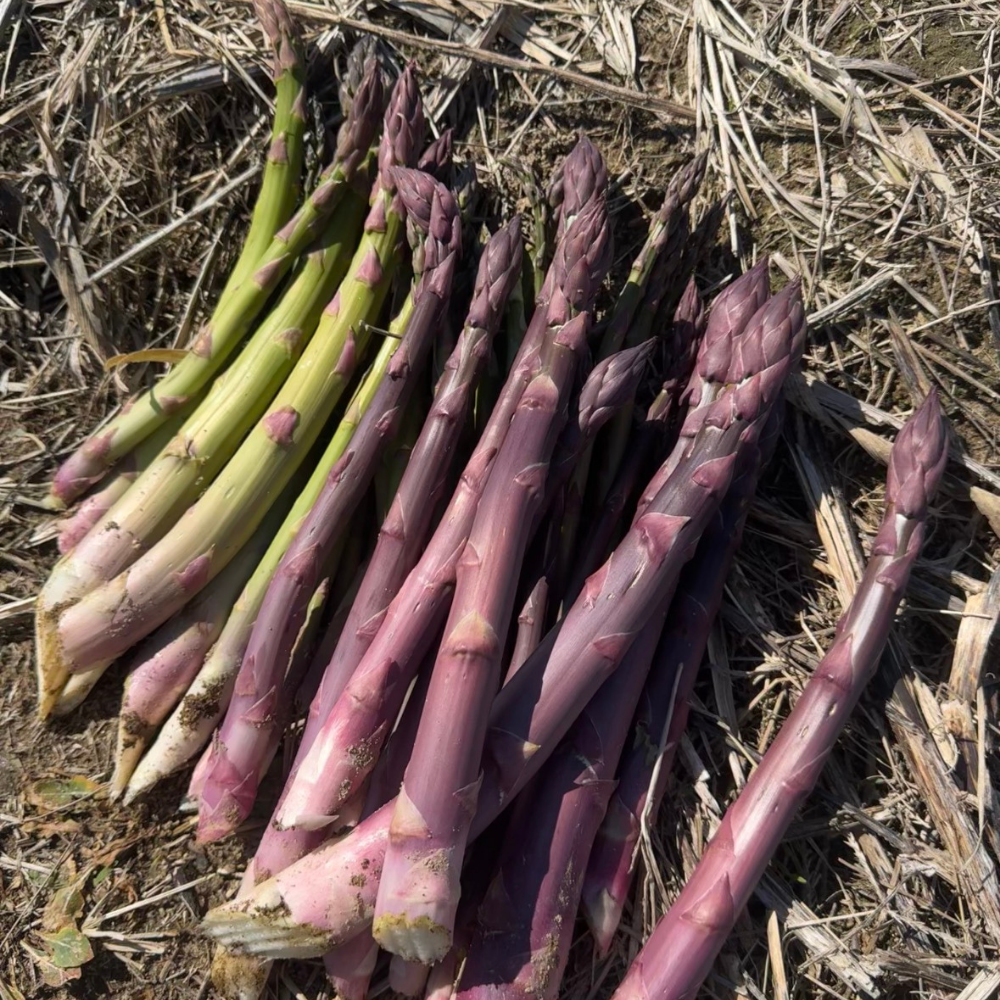
Asparagus is special to me because my grandfather, Steve Garrison, spent his career and retirement breeding asparagus and developing new varieties that could grow in different climates. In fact, my first job was helping him with his experiments at Rutgers Agricultural Research and Extension Center in Bridgeton. I helped harvest asparagus using different methods to determine which was most effective at extending the harvest. I attribute that job to starting my interest in farming.
Asparagus, scientifically known as Asparagus officinalis, is a member of the lily family. This vegetable grows edible spears that come in green, purple, and white colors. People around the world enjoy asparagus and commonly use it in grilled dishes, frittatas, pasta, and stir-fries.
Health Benefits of Asparagus
What does asparagus taste like? Asparagus has an earthy flavor that is slightly sweet. Cooking-wise, it is most similar to green beans.
What are the health benefits of eating asparagus?
Asparagus is high in many vitamins and minerals
- Vitamin K – high in blood clotting, bone health and hearth health
- Vitamin A- is needed for vision, immune function, skin health and cell growth.
- Vitamin C- supports immune function and helps with iron and folate absorption.
- Folate – essential for neural development during pregnancy
- Antioxidants – help reduce oxidative stress and carcinogens
- Diuretic- helps flush excess fluid and salt from the body which can help with detoxing
Just half a cup of cooked asparagus contains:
- Calories: 20
- Protein: 2.2 g
- Fat: 0.2 g
- Fiber: 1.8 g
- Vitamin C: 12% of the RDI
- Vitamin A: 18% of the RDI
- Vitamin K: 57% of the RDI
- Folate: 34% of the RDI
- Potassium: 6% of the RDI
- Phosphorous: 5% of the RDI
- Vitamin E: 7% of the RDI
Asparagus can get a bad rep because it can make your pee smell. It is an unpleasant sulfur smell that goes away with time. However, some people don’t produce the smell at all and while some people produce it, they can’t smell it. The “pee smell” is completely normal; it’s actually a sign that your body is efficiently metabolizing the compounds in asparagus. This blog post covers more about the science behind asparagus changing your pee smell. Why Does Asparagus Make Your Pee Smell? And Why It’s No Reason to Avoid This Veggie – Diary Of A Self-Help Addict %
How is Asparagus Grown?
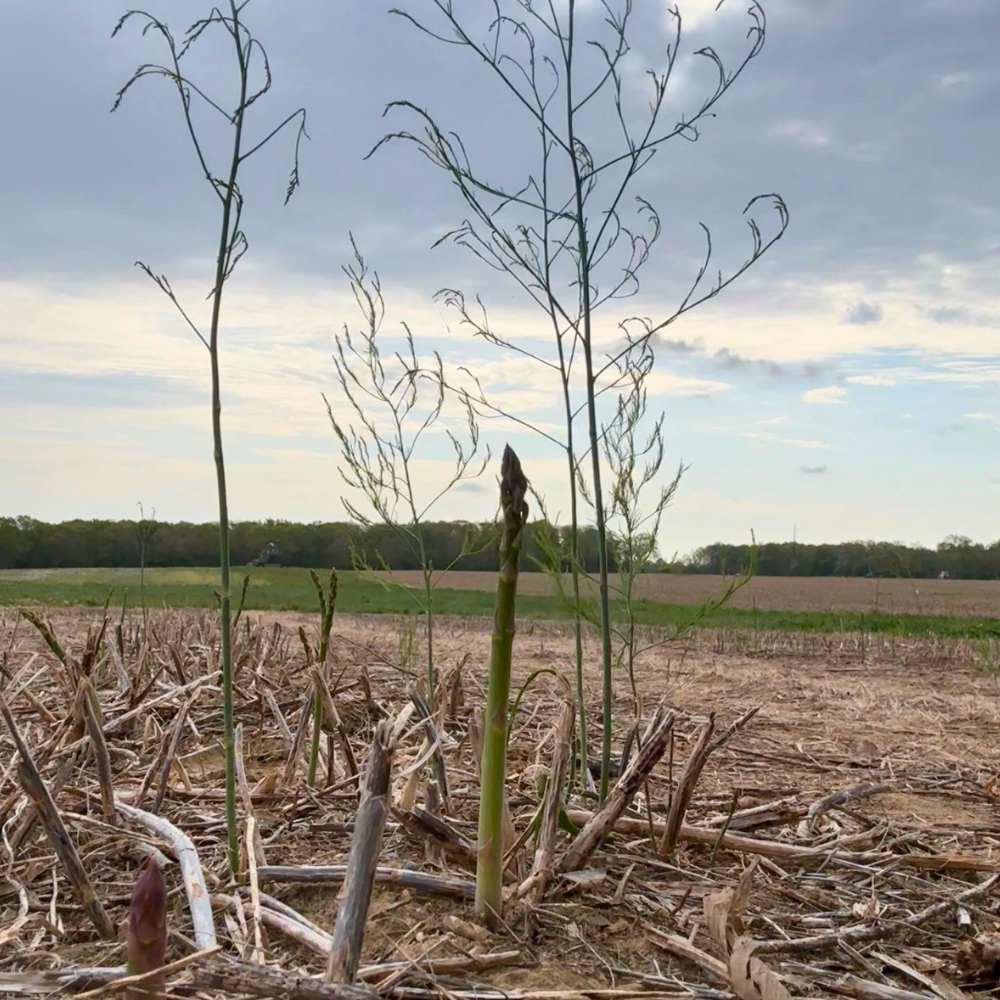
Asparagus is a perennial plant that comes back each year because it is grown by a crown. The crown is similar to a large root or bulb. It can take 3 to 4 years for the crown to mature before you can start to harvest asparagus regularly. The crown produces spears from the energy gained from the prior growing season. Healthy asparagus crowns can produce for 15 to 20 years. You can expect about a pound of asparagus each season from one crown.
The crown produces spears, which are harvested and eaten. Once the growing season has ended, the crown will grow stalks with green feathery foliage called ferns. These stalks get to be over 5 feet tall. They grow like this all season to store energy in the crown for the next season. In the fall, the stalks die back, and you can mow them down.
You need to harvest asparagus every day because it can grow 3-7 inches each day, depending on the weather. In warm weather, it grows faster and in cool weather it grows slower. You harvest asparagus by taking a knife and applying pressure to the stalk at the base of the stalk at the height of the soil and pushing down into the soil to cut it. This method ensure you don’t damage other stalks that might be forming under the soil and doesn’t damage the crown.
What is the best month to buy asparagus?
It depends on where you live. Here in South Jersey, the USDA growing zone is 7a and 7b. Asparagus is in season here from about April 15 to June 15. You can expect to see it sold in bunches tied together with a rubber band that are sized in 1-pound groups.
How To Prepare Asparagus To Cook With
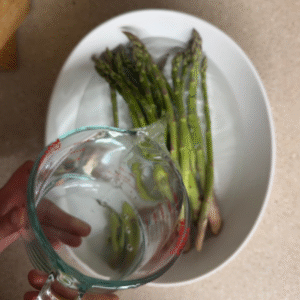
To wash asparagus, you can completely soak the stalks in warm water for 10 minutes. This allows the triangular flaps to open up and get any dirt that might be trapped inside, out. You don’t have to wash with soap or any special vegetable cleaner that removes pesticide residue. Asparagus is on the EWG Clean 15 list for the lowest amount of pesticide residue.
Asparagus can be enjoyed raw, served long or chopped in small pieces. The top of the stalk is crunchy and has more flavor. The bottom part of the plant is woody and harder to chew.
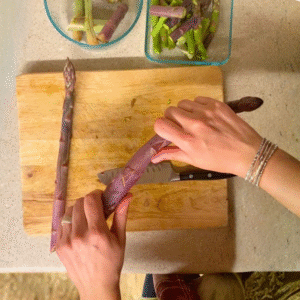
If you take the stalk of the asparagus and lightly bend it, you will see where it naturally bends. Snap the asparagus where it bends naturally. This is about 2/3 the way down the stalk; sometimes it can be half the stalk. Discard the bottom woody part and save the top. You can compost the bottom or save for a vegetable broth.
When I cook asparagus, I prefer to chop mine into 1 to 2-inch-long pieces. This makes it easier to pick up with a fork and eat.
Easy Asparagus Recipe
There are many recipes with asparagus that beginners and professionals can cook. Some basic beginner recipes are grilled or boiled asparagus. An experienced cook might serve asparagus wrapped in bacon or in cream of asparagus soup.
People prefer different textures of asparagus, either mushy or crunchy. Boiling asparagus creates a mushy texture. You can vary the crunchiness of asparagus depending on the length you cook it for. The longer you cook it, the softer it will be.
This recipe will be for grilled asparagus. You do not need a grill to make grilled asparagus. It is an easy recipe that kids will eat. I get so many compliments every time I make grilled asparagus for someone new. I always measure with my heart so I refined this recipe enough to share with you below.
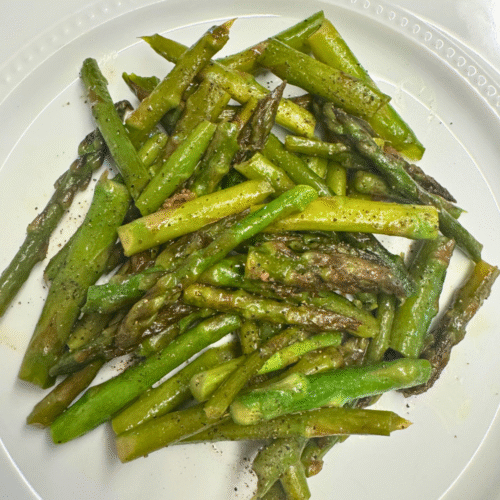
Grilled Asparagus
Equipment
- pan: stainless steel or cast iron with a matching lid
- spatula
Ingredients
- 1 bunch Jersey Fresh Asparagus
- 1/2 tsp salt
- 1/2 tsp black pepper
- 1/2 tsp garlic powder
- 1/2 tsp onion powder
- 2 tbsp oil avocado or butter
Instructions
- Turn on the stove top to medium heat, place your pan on the stove
- Prep your asparagus as described above (wash and cut into 1-2 inch pieces)
- Put your washed and cut asparagus in a mixing bowl, and pour 1 tablespoon of oil in the bowl.
- Add seasonings in the mixing bowl. Feel free to add more as needed, measure with your heart
- Mix the seasoning, oil, and asparagus so everything is evenly coated.
- Add 1 tbsp of butter or oil to the warm pan
- Once the butter melts, add the seasoned asparagus to the pan
- Cover with a lid. This keeps the heat in. It will turn a bright green color.
- Mix and flip the asparagus around so it doesn’t stick. Add more oil if it is sticking.
- Keep stirring occasionally so everything gets evenly cooked for about 10 minutes. Test this by finding the thickest pieces of asparagus and try poking it with a fork. If it is soft enough than, you are done cooking. If it is firm, let it cook a little longer.
Grilled asparagus pairs well with grilled steak and potatoes, whether mashed or grilled. Just remember, you don’t need a grill to make grilled asparagus.
Storage & Preservation of Asparagus
How long does asparagus last?
For Short Term Storage:
To keep asparagus fresh while you are waiting to cook it, you can treat it like you would treat flowers. Place the stalks in a shallow bowl of water and stand them upright. That method will keep your asparagus fresh for 7-10 days. If stored just in the fridge, asparagus will last 5-7 days. Your asparagus will grow about an inch taller a day like this.
For long-term storage:
The most common way to preserve asparagus is to freeze it. If you are more savvy in the kitchen, you may can it, dehydrate it or pickle it.
To freeze asparagus:
- Wash and cut your asparagus to the desired lengths
- Blanch in boiling water for 3 minutes. Blanching preserves color, flavor, and texture.
- Once the time is up, immediately place the asparagus into an ice bath to stop cooking. Wait until the asparagus is cool to touch.
- Pat the asparagus dry with a towel. Drying the stalks before freezing, this helps prevent freezer burn and ice crystals.
- Package and place in the freezer.
Conclusion
When you understand how your food is grown, you appreciate it more. I hope this guide taught you the nutritional value of asparagus and how to grow, prepare, cook, and store it. If you have a recipe with asparagus, please leave a comment below to help others learn how to use asparagus in the kitchen.
This post may contain affiliate links. Please read our disclosure policy
Great article! I love asparagus! The health benefits, and flavor are amazing! It’s so versatile… I even add it to my chicken or veggie pot pie recipe. Thanks for sharing! 💚
That sounds so delicious! Thank you for sharing 🙂