Raising Baby Chicks: Everything You Need to Know
Bringing home baby chicks is one of the most exciting parts of starting a backyard flock. The littler fluff balls and their tiny chirps make it irresistible to get baby chicks each spring. But baby chick care requires a little preparation to make sure your chicks grow into healthy, productive chickens.
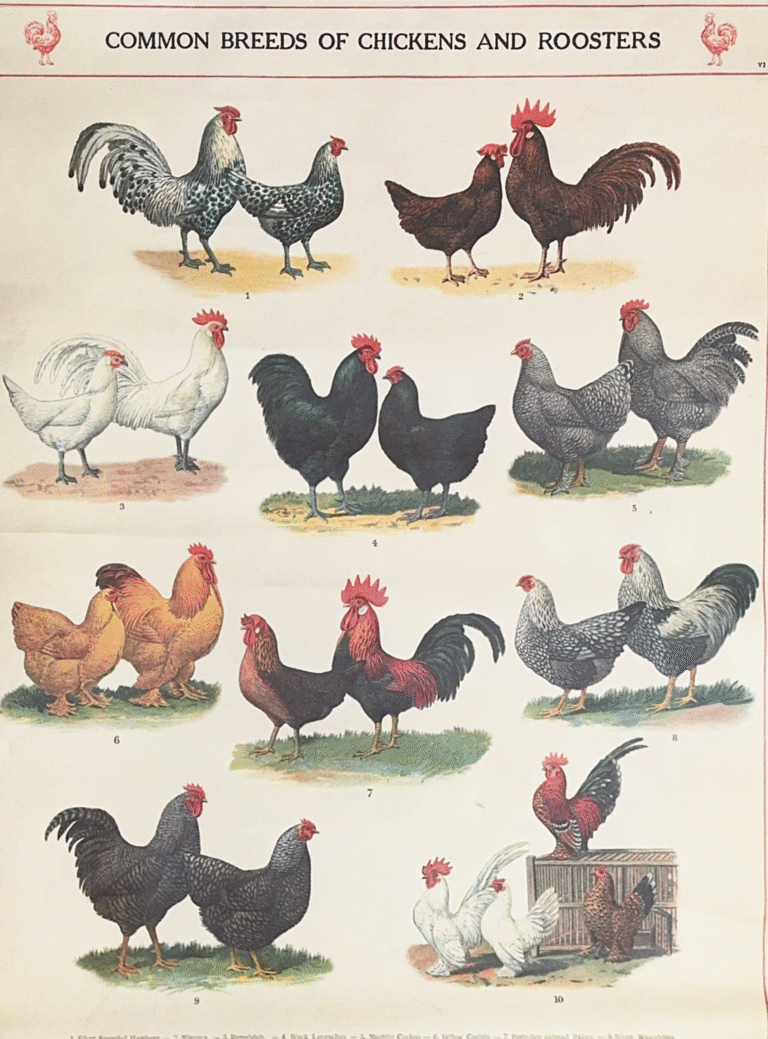
Whether you’re a backyard chicken keeper, homesteader, or simply curious about raising poultry, this beginner-friendly guide will show you how to raise baby chicks successfully at home. Still in the beginning stages of wanting baby chicks? Check out these most popular chicken breeds for beginners with easy-to-read comparison tables.
If you’re raising chicks for the first time, this guide will walk you through everything you need to know. From setting up the perfect brooder to feeding, temperature requirements, and preventing common health issues, this baby chick care guide will help you raise happy and healthy chickens from day one.
How to Set Up a Brooder for Baby Chicks
What is a Brooder?
A brooder is a shelter for the baby chick that replaces the mother hen in nature. The brooder will be a safe and warm place for your baby chicks until they are ready to go outside. If you are taking the time now to read about the care of baby chicks, they are already getting a good start in life.
Have the brooder in a protected indoor space where the temperature stays about the same. A garage, barn, shed, or protected indoor space are all ideal options. Your chick brooder should be protected from drafts but still allow fresh air circulation. Poor ventilation can cause moisture buildup and respiratory problems.
Most people brood chicks for many different reasons. Brooding baby chicks is a way to ensure the baby chicks have a better chance at survival. When you brood chicks inside, often during early spring, you are able to start them sooner and produce egg-laying chickens sooner.
Brooder Container Options
You don’t need anything fancy to create a chick brooder. The most important thing is that the brooder is draft-free, easy to clean, and tall enough so chicks cannot escape as they grow. Many beginners have successfully used:
- Large plastic storage bins
- Stock tanks
- Cardboard boxes
- Wooden brooders
- Livestock watering troughs
- Tents
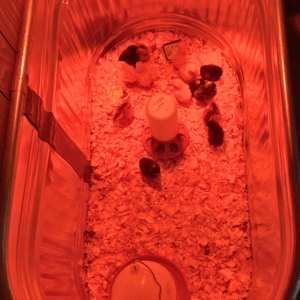
In the past we have kept our baby chicks inside in a metal watering trough… Warning! Keeping baby chicks inside gets dusty fast! Find an alternative option if you have allergies.
Space Requirements Per Chick
Unfortunately, those cute fluffball baby chicks grow too fast. Be sure to give them enough room. Overcrowding can cause stress, pecking, and health problems. When chicks are 0 to 2 weeks old, they need ½ square foot per chick. From 3 to 6 weeks, they need 1 square foot per chick.
Baby Chick Heat Requirements
Maintaining proper chick heat lamp temperature is one of the most important parts of baby chick care. It is important to keep baby chicks warm to mimic a mother hen nesting over them. Just like a newborn baby, baby chicks can’t regulate their own body temperature. Below is a temperature chart by age. Lower the temperature by about 5°F each week until chicks are fully feathered and can go outside.
When baby chicks are too cold, they will chirp loudly and be huddled tightly under the heat source. When baby chicks are too hot, they will be far from the heat source, panting, and wings spread out.
Typically by 6 weeks, the chicks will be fully feathered and the temperatures outside are warm enough to move them out of the brooder and into a coop.
Here is a baby chick temperature chart by week to help you maintain the correct brooder heat:
| Chick Age | Brooder Temperature |
| Week 1 | 95°F |
| Week 2 | 90°F |
| Week 3 | 85°F |
| Week 4 | 80°F |
| Week 5 | 75°F |
| Week 6 | 70°F |
(Heat Lamp vs Brooder Plate)
Baby chicks cannot regulate their body temperature, so they need a heat source. Heat lamp and brooder plates both have their pros and cons. When choosing a baby chicks heat source, many people debate between heat lamps and brooder plates. Pick whichever heat source you feel comfortable with.
Heat lamps
- Traditional option
- Provide strong warmth
- Must be securely installed to prevent fire risk
Brooder heat plates
- Safer alternative
- Mimic the warmth of a mother hen
- More energy efficient
What Do Baby Chicks Eat?
For the first 6 to 8 weeks, chicks should eat chick starter feed. Baby chicks’ diet needs are different than typical egg layer feed. Feeding chicks the proper diet is essential for healthy growth. Baby chick starter feed has 18-20% protein, a crumbled texture, and added nutrients. There is medicated feed that can help prevent coccidiosis, but most natural homesteaders avoid it.
If chicks only eat commercial feed, then they do not need grit. Grit helps with digestion. If you give chicks treats like mealworms, bugs, or vegetable scraps, they will need grit to help digest it.
We love grabbing a scoop of dirt or a clump of grass from the yard and letting the baby chicks practice foraging. If they find a worm in the soil, it is so fun to watch them chase each other for the worm. Our kids will spend hours searching for bugs to give to the chicks.
Avoid feeding chicks:
- Bread
- Sugary foods
- Salty foods
- Large seeds
How Much Do Baby Chicks Eat?
Hatched to 1 week – one chick eats an ounce of feed a day
Week 2 – one chick eats 2 ounces a day
Week 3-6 – one chick eats 2-4 ounces a day
How to Give Baby Chicks Water Safely
Fresh, clean water is just as important as food when raising baby chicks. Always make sure baby chicks have access to water. Here are a few chick waterer tips to keep your chicks safe.
Cold to room temperature water is best; hot water can cause heat stress in chicks. There are special chick waterers to purchase that prevent baby chicks from falling into the water and protect the waterer from getting clogged with bedding.
Replace the water at least daily, but more often if bedding gets inside. If the chicks kick too much bedding in the waterer, try propping the waterer up on a plate or bowl so it sits above the bedding.
It is not necessary to dip your baby chicks’ beaks into water. Some people do that, so the chicks learn where their water is. Be careful not to get your baby chicks’ fluff/ feathers wet because it can decrease their body temperature.
Best Bedding for Baby Chicks
You will want to have bedding in your brooder so the baby chicks will have something sturdy to walk on and scratch. Chickens are natural foragers, so baby chicks instinctually forage and kick up their bedding. Having proper bedding in the brooder keeps chicks warm, dry, and comfortable. Not having enough bedding can cause the baby chicks to fall, eventually causing straddle leg. Read more below about common baby chick health issues.
There are many different types of bedding. Avoid cedar shavings because they can cause respiratory issues in chickens. Most popular bedding options for baby chicks are pine shavings. Other bedding for brooders are sawdust, paper, sand, hemp, and pellets. You want to look for bedding that is absorbent and easy to clean.
Keep about 2-3 inches of clean bedding in the brooder. Replace the bedding regularly to decrease bacteria and ammonia buildup. Keeping the brooder clean is one of the best ways to maintain healthy baby chicks.
Common Chick Health Problems
Even with proper care, chicks can occasionally develop minor health issues. One of the most common problems with baby chicks is pasty butt. Additionally, you can read about dehydration, spraddle leg, and pecking/ bullying below.
Pasty Butt – when chicks are unable to pass waste and get stuck to the feathers around the exit.
Solution – Gently clean with warm water and a soft cloth
Dehydration – weakness, drooping wings, lethargy
Solution – Encourage drinking by dipping the chick’s beak into water and possibly offering electrolytes
Spraddle Leg – A condition where chicks cannot stand properly, often caused by slippery brooder surfaces not having enough bedding
Solution – gently hobbling the legs together for a few days
Pecking and Bullying – Chicks establish a pecking order early. Too much pecking can indicate overcrowding, boredom, or nutritional deficiencies.
Solution – Provide enough space and enrichment
Can You Hold Baby Chicks?
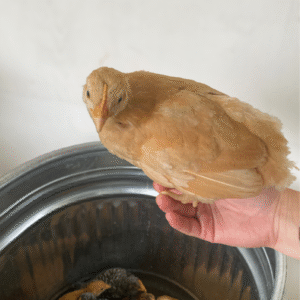
Yes! Handling chicks helps with their temperament and makes them more comfortable around people. It is highly recommended to socialize your egg-laying chickens, so they become comfortable with you. It will only improve their relationship with you later on… plus they are so cute! Short, gentle interactions help chicks grow into friendly backyard chickens.
Tips for Handling Chicks
- Move slowly and gently
- Hold chicks close to your body
- Avoid squeezing or dropping
Signs of Stress
- Loud chirping
- Struggling to escape
- Heavy breathing
When Can Baby Chicks Go Outside?
Most chicks can begin outdoor time around 3–4 weeks old, depending on the weather. To enjoy outside time, baby chicks should have partial feathers. The temperature should be mild, between 55-and 75°F. Baby chicks should be supervised while outside to keep predators away.
Baby chicks are ready for the chicken coop when they are fully feathered, which occurs around 6-8 weeks old. They can regulate their body temperature at that time. Gradually transitioning them helps reduce stress.
Be cautious if introducing baby chicks into an established flock. Chickens have a pecking order and may reject the baby chicks or bully them. Read more about chicken pecking order here.
Baby Chick Care Checklist
Use this quick checklist to make sure your chicks have everything they need and help you raise strong and healthy chickens
- Warm brooder with proper temperature
- Safe heat source
- Clean chick starter feed
- Fresh water daily
- Dry bedding (pine shavings)
- Enough space per chick
- Daily health checks
FAQ About Baby Chick Care
How long do baby chicks need a heat lamp?
Most chicks need supplemental heat for about 5–6 weeks, or until they are fully feathered and outdoor temperatures are warm enough.
Can baby chicks get wet?
No. Baby chicks should not get wet, as they can quickly become chilled and develop health problems.
How many chicks should you raise together?
Chicks are social animals and should be raised in groups. A good starting number for beginners is 3–6 chicks.
Why are my baby chicks chirping loudly?
Loud chirping often means chicks are cold, hungry, thirsty, or stressed. Check the temperature, food, and water immediately.
Conclusion on Raising Baby Chicks
Raising baby chicks that grow into happy and healthy chickens is a very rewarding experience. Chickens can offer companionship, 300+ eggs a year, or meat to fill your freezer. With the right brooder setup, proper feed, and clean water, your chicks will grow into healthy adult chickens.
If you are curious about which chicken breed is right for you, check out these side-by-side comparison charts of the most popular chicken breeds.
If you’re starting your first flock, be sure to save this guide or share it with other new chicken keepers so they can raise healthy chicks too.
This post may contain affiliate links. Please read our disclosure policy